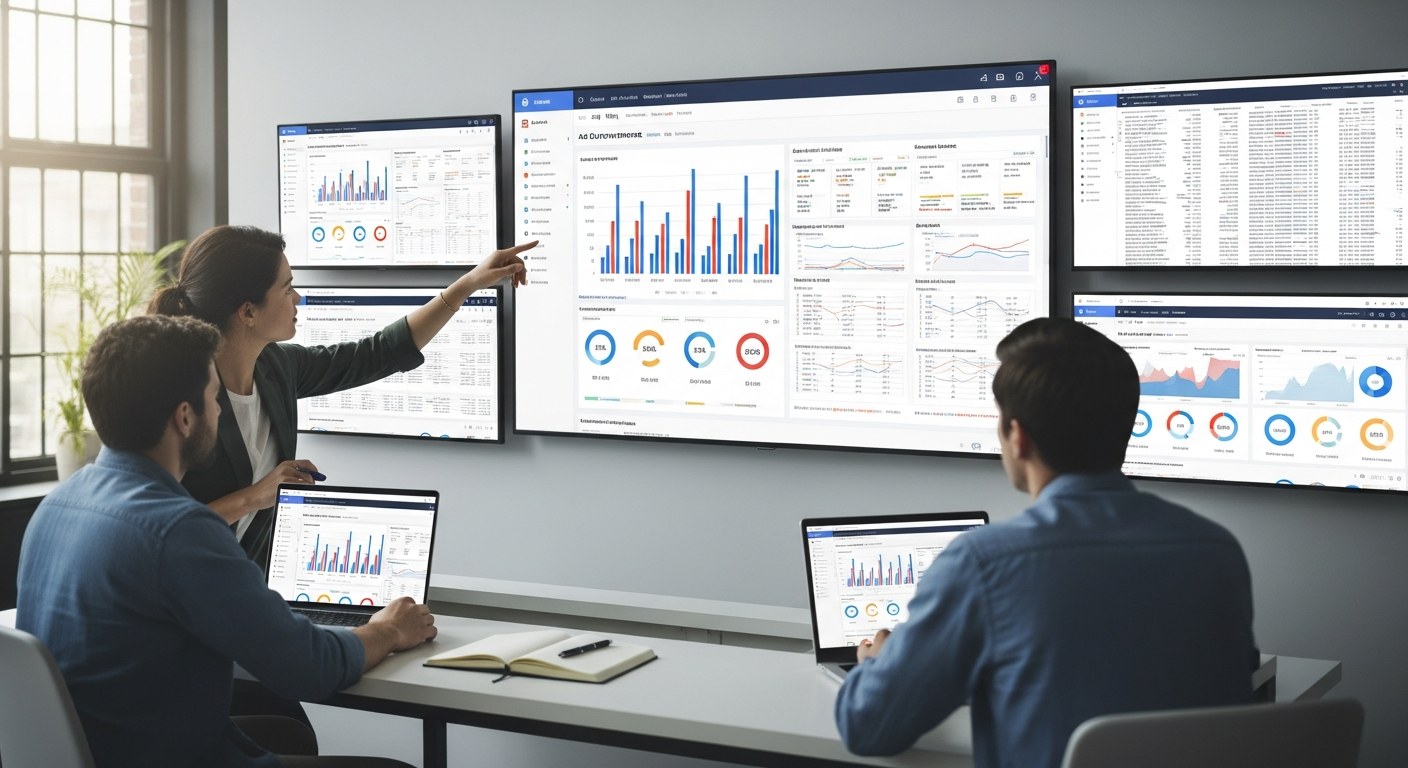
A systematic ad creative testing framework for ecommerce isolates one variable at a time — hook, format, offer angle, or visual — forms a clear hypothesis before launching, and uses predetermined data thresholds (CTR, CPA, ROAS) to make kill, iterate, or scale decisions. Brands that operationalize this process consistently lower their cost per acquisition over time; brands that test randomly burn budget without building compoundable knowledge.
Key Takeaways
- Creative is the primary performance lever in paid ads — more impactful than targeting or budget in 2026
- Most brands test randomly; a structured framework isolates variables and builds reusable creative intelligence
- Each test needs a hypothesis, a single variable, defined success metrics, and a minimum runtime (7+ days)
- UGC ads generate 4x higher CTR — but only when tested systematically, not just thrown into account
- A creative pipeline requires a production calendar, a brief template, and a "swipe file" of winners to iterate from
Why Creative Is the #1 Lever for DTC Ad Performance (And Most Brands Miss It)
Targeting has narrowed. Audience options on Meta and TikTok have consolidated — Advantage+ Shopping, broad targeting, and algorithmic optimization mean most brands are running fundamentally similar audience setups. The differentiator is no longer who you reach. It's what they see. Worth noting: Meta now auto-rewrites text overlaid on your image creatives via Advantage+ Creative AI text rewriting — understanding how that interacts with your creative testing is essential before you scale. And if your creative tests have been disrupted by unexpected CPM shifts since late August, that may be because Meta removed manual ad placement controls in August 2026 — changing where your ads actually run.
When creative output slows, ad diversity shrinks. When diversity shrinks, platform signals weaken — the algorithm has fewer performance signals to learn from and can't optimize efficiently. When signals weaken, CAC rises. Brands that treat creative as an afterthought are effectively handing the optimization lever to their competitors who are producing more, testing faster, and learning more per dollar spent.
The data backs this up: brands treating creative as infrastructure — as a systematic, high-volume, continuously iterated function — control their CAC in a way that brands doing ad-hoc creative production simply cannot. According to research from ConstantHire (March 2026), the brands most resilient to rising CPMs are those running active creative testing programs with defined iteration cycles, not those with the biggest budgets.
The implication is direct: if your paid media team is optimizing bids and audiences but your creative process is "design something, run it, see what happens," you're optimizing the wrong variable.
The Creative Testing Trap: What Brands Get Wrong
Most ecommerce brands do run creative tests. The problem is that what they call "testing" is actually random variation with no structure — and random variation produces noise, not intelligence.
Here's what the trap looks like in practice:
- A designer makes three banner ads with different images but no defined hypothesis
- All three run simultaneously with overlapping audiences, contaminating the data
- One performs better, but the team doesn't know why — was it the image? The copy? The offer? The format?
- The "winner" gets scaled, but it can't be iterated because no one knows which variable drove performance
- When that creative fatigues, the team starts the cycle over from scratch
This approach burns budget without building knowledge. Every test that doesn't isolate a variable is a wasted learning opportunity. The fastest-scaling DTC brands aren't running more tests — they're running better-structured tests that generate compoundable insights.
The second trap is premature optimization: killing creatives before they reach statistical significance, or scaling winners before the algorithm has exited its learning phase. Both behaviors inject noise into the data and make future decisions worse, not better.
Build Your Creative Testing Framework: Variables, Hypotheses, Decisions
A structured creative testing framework has four components: a defined variable, a hypothesis, a success metric, and a decision rule. Every test needs all four before it launches.
Define the Variable
Test one thing at a time. Common variables include: hook (first 3 seconds of video or first line of static copy), visual format (UGC vs. studio product shot vs. lifestyle), offer angle (discount vs. free shipping vs. bundle value), CTA (Shop Now vs. Learn More vs. Get Yours), and social proof (review quote vs. star rating vs. customer count). As AI product photography matures, it's also worth testing AI-generated lifestyle imagery against traditional studio shots — our guide to AI product photography for ecommerce covers which product categories benefit most and what a production-ready hybrid workflow looks like.
Form a Hypothesis
A hypothesis is a prediction: "We believe [variable A] will outperform [variable B] because [reason], and we'll measure success by [metric] at a [threshold]." Writing this down before the test runs forces clarity and prevents post-hoc rationalization. Example: "We believe a UGC review hook will outperform our current studio product hook because our audience data shows 68% of purchasers cite trust as a key buying signal. We'll measure CTR over 7 days with a $1,000 test budget."
Set Success Metrics
Choose one primary metric per test, matched to your campaign objective. For top-of-funnel awareness, CTR (click-through rate) and hook rate (percentage of viewers who watch past 3 seconds) are the right signals. If you're testing video specifically, our guide to ecommerce video ad creative frameworks covers hook rate benchmarks and the three structures that consistently drive ROAS. For bottom-of-funnel conversion campaigns, CPA (cost per acquisition) and ROAS are the decision metrics. Mixing metrics from different funnel stages creates false conclusions.
Define Decision Rules in Advance
Before the test runs, decide: at what performance threshold will you scale this creative? At what threshold will you kill it? At what threshold will you iterate rather than replace entirely? Setting these rules before the data comes in removes emotional bias from the decision — one of the most underrated disciplines in paid media management.
How Many Creatives to Test and How Long to Run Each
The number of creatives you can test in parallel is a function of your ad spend, not your creative team's output capacity. Each creative variant needs enough budget to generate statistically meaningful data — typically 2,000–3,000 impressions for awareness metrics, or 50+ conversions for CPA-based decisions.
| Monthly Ad Spend | Creatives to Test Per Cycle | Minimum Test Budget Per Creative | Recommended Test Duration |
|---|---|---|---|
| $2,000–$5,000/mo | 2–3 | $200–$400 | 7–10 days |
| $5,000–$15,000/mo | 3–5 | $400–$800 | 7–10 days |
| $15,000–$50,000/mo | 5–8 | $800–$1,500 | 7 days minimum |
| $50,000+/mo | 8–15 | $1,500–$3,000 | 5–7 days (faster signal) |
On duration: never cut a test before 7 days unless you have a clear performance catastrophe (CPA 10x target with no sign of improvement). The Meta and TikTok algorithms run a learning phase — typically 50 optimization events — before performance stabilizes. Decisions made before the learning phase completes are based on distorted data.
On test structure: run creative tests in a dedicated testing campaign (CBO or ABO), isolated from your scaling campaigns. If you're running AI-managed campaigns alongside manual ones, the Shopify Campaign Autopilot guide explains how to structure Autopilot for broad prospecting while keeping retargeting under manual control. Mixing test creatives into live scaling campaigns contaminates both the test data and the scaling campaign's optimization.
Reading the Data: When to Kill, Iterate, or Scale
The post-test decision isn't binary (kill vs. keep). There are three outcomes, each with a different playbook:
Kill
Kill a creative when it consistently underperforms your benchmark metrics and shows no trajectory of improvement after the learning phase. Don't archive it — document why it underperformed in your testing log. That negative signal is valuable: it tells you what your audience doesn't respond to, which informs future hypotheses.
Iterate
Iterate when a creative shows partial performance — for example, strong hook rate (people are stopping) but poor CTR (they're not clicking). This means the concept has legs but the call to action or offer presentation isn't working. The smart move is to keep the hook and test a new body copy or CTA, rather than rebuilding from scratch.
Scale
Scale winners gradually — increase budget by 20–30% every 48–72 hours rather than 5x overnight. Aggressive budget increases force the algorithm back into the learning phase, often tanking CPA in the process. A winner that you scale carefully will compound returns over weeks; one that you blow up overnight will often collapse within days.
Watch for fatigue signals on all active creatives: a 20–30% decline in CTR from peak performance, or frequency exceeding 3.0 on cold audiences, signals the creative needs a refresh. The right response is to iterate — not to kill — unless performance has dropped below your minimum threshold.
Creative Formats Worth Testing in 2026: UGC, Static, Video, Carousel
Each format has distinct performance characteristics and production requirements. According to research compiled by Tint (via AskNeedle, January 2026), ads featuring UGC generate 4x higher click-through rates than polished studio creative — but that advantage only materializes when UGC is shot and edited natively for the platform, not repurposed from Instagram stories or influencer posts without modification.
Research from EnrichLabs (February 2026) adds a nuance that most brands miss: the optimal format depends on your product's average order value. Video creative drives the highest ROAS for high-AOV products (where consideration time is longer and trust signals matter more), while product catalog ads and static creative outperform for low-AOV impulse purchases (where immediacy and offer clarity matter more). Brands that apply this framework — matching creative investment to unit economics — consistently outperform those using a one-size-fits-all format strategy. One format decision that's increasingly relevant in 2026: whether to use real UGC or AI-generated creative — a choice that has real performance data behind it now, with different answers depending on AOV, audience temperature, and campaign objective.
| Format | Best For | Primary Strength | Key Risk | Production Cost |
|---|---|---|---|---|
| UGC Video | High-trust products, repeat purchasers, social proof | 4x CTR lift, high authenticity | Inconsistent quality from creators | Low–Medium ($50–$300/clip) |
| Studio Product Video | High-AOV, brand-building, premium positioning | Brand equity, production quality | Feels "addy," fatigues faster | High ($1,000–$10,000+) |
| Static Image | Low-AOV impulse, retargeting, offer-driven | Clear offer presentation, fast load | Limited attention capture | Low ($50–$200) |
| Carousel | Product line showcases, feature-heavy products | Multiple touchpoints per impression | Requires strong per-card hooks | Low–Medium ($100–$500) |
| Dynamic/Catalog | Retargeting, large catalog brands, low-AOV | Automated personalization at scale | Generic appearance, low brand equity | Low (asset-based, no production) |
The highest-performing creative programs in 2026 don't pick one format — they test across formats systematically, identify the format-audience match that drives the best results at each funnel stage, and allocate production resources accordingly. Our UGC creator brief template for ecommerce covers how to brief creators for performance — hook options, raw footage requirements, and usage rights language included.
Building a Creative Pipeline That Never Runs Dry
A systematic creative testing framework breaks down without a reliable production pipeline. The two most common failure modes: creative fatigue hitting a winning ad with nothing ready to replace it, or a testing cycle stalling because new creatives weren't briefed on time. This pipeline challenge becomes especially acute heading into Q4 — for a full breakdown of how to structure your creative vault, seasonal variants, and fatigue triggers for peak season, see our Q4 ad creative strategy for ecommerce brands. Building a dedicated UGC content engine for ecommerce — with a vetted creator roster, brief templates, and a monthly production calendar — is the structural fix that prevents both failure modes simultaneously.
The fix is a production calendar built backward from your testing cadence. If you run weekly test cycles and each cycle deploys 4–5 new creatives, your pipeline needs to produce 4–5 finished assets per week. Work backward: final creative is due Monday, edits complete Friday, filming/shooting Wednesday, brief finalized by Tuesday of the prior week. That cadence becomes a team workflow, not a scramble.
Three tools make this sustainable at scale:
- A brief template: A standardized creative brief captures hook options, product claims, offer details, visual direction, and platform specs. Briefs written to a consistent template produce more on-spec creative and require fewer revision rounds
- A swipe file of winners: Every time a creative wins a test, document the elements that worked — hook structure, visual treatment, offer framing — in a shared reference file. Future briefs should explicitly build on these elements, not start from a blank page
- A creator or production roster: Whether in-house or UGC creators, having a pre-vetted roster you can activate on a rolling basis eliminates the most common production bottleneck: finding people who can execute quickly and on brand
The brands that maintain consistently low CAC aren't those that occasionally produce a brilliant creative — they're the ones running 40–60 new creatives through testing every month, building a compounding library of validated performance insights. Volume, structure, and iteration together create the compounding advantage that random creative production never achieves.
This framework integrates directly with your paid media management strategy — creative testing intelligence should be informing targeting decisions, bidding strategy, and campaign architecture, not running in a separate silo.
How Atlas Runs Creative Testing Programs for Ecommerce Brands
At Atlas, creative testing isn't a feature of our ad management service — it's the foundation of it. When we take on a brand's paid media, the first 30 days are almost entirely diagnostic: we audit existing creative performance, map what variables have been tested (and which haven't), identify the highest-leverage testing opportunities, and build a structured testing calendar for the next 90 days.
From there, our process runs on a weekly cadence: new test creatives briefed, produced, and launched Monday; first data review Wednesday (early kill decisions only); full week review and iteration decisions the following Monday. Every test is logged in a central creative intelligence document that builds over time into a playbook specific to that brand's audience.
We also handle production. Our in-house creative team and UGC creator network produce the static, video, and UGC assets the testing calendar demands — at the volume that moves performance metrics, not the volume a monthly retainer makes administratively convenient. Brands that hire us for creative strategy and production alongside paid media management typically see their testing velocity double within 60 days, because the brief-to-launch cycle no longer depends on a single internal designer or an external agency turnaround time.
The result is a creative program that compounds: every 90-day testing cycle produces a library of validated insights, a roster of proven creative elements, and a set of performance benchmarks that make the next 90 days faster and more efficient. That's how the brands we work with build structural CAC advantages that sustain even when CPMs rise and targeting options consolidate.
This creative testing discipline becomes especially critical heading into peak season. If you're planning your Q4 paid media approach, our guide to ecommerce holiday season preparation 2026 covers exactly how to use September as your creative testing window before Black Friday CPMs spike. For a deeper look at building the full Q4 creative pipeline — how many variants you need, the August-to-November production calendar, and how to use Meta and TikTok AI tools to multiply output — see our Q4 ad creative strategy guide for ecommerce brands. And while your creative pipeline is coming together, make sure your Shopify store itself is ready for the traffic surge — our Shopify BFCM Store Prep Checklist 2026 walks through every technical, checkout, and campaign configuration step on a 9-week timeline.
See how we build and manage performance marketing programs for ecommerce brands, or read our breakdown of Meta Advantage+ campaigns to understand how creative feeds the algorithm in 2026's ad infrastructure. For brands testing Meta's newest placement type, our Meta Live Video Ads ecommerce playbook covers exactly how to structure creative and campaigns for live broadcast ad units.
Frequently Asked Questions
How many ad creatives should I test at once?
For most ecommerce brands spending $5,000–$50,000/month on paid ads, testing 3–5 creative variables per cycle is the practical ceiling. Beyond that, you dilute budget per creative and lose statistical confidence before you get meaningful data. Each creative needs roughly 2,000–3,000 impressions or 50+ link clicks before you can draw reliable conclusions — so scale the number of tests to your actual spend level, not to an idealized volume.
How long should I run a creative test before making a decision?
Run creative tests for a minimum of 7 days before making kill or scale decisions, and never less than the time needed to reach statistical significance — typically 50+ conversions per variant for conversion-based objectives. Stopping too early is the most common testing mistake: it leads to false winners that collapse when scaled, or false losers that get killed before they had a chance. Give the algorithm time to exit the learning phase (usually 50 optimization events) before drawing conclusions.
What's the difference between A/B testing and multivariate creative testing?
A/B testing compares two versions of a single variable — for example, two different hooks with everything else held constant. Multivariate testing runs multiple combinations simultaneously, such as testing 3 hooks × 2 body copy variants × 2 CTAs. A/B testing is simpler and reaches significance faster; multivariate testing surfaces interaction effects between elements but requires significantly more budget and volume. For most mid-market ecommerce brands, structured A/B testing — isolating one variable per test — produces more actionable learning at lower cost.
How do I know when a winning creative is starting to fatigue?
Creative fatigue shows up in the data before it shows up in your revenue numbers. Watch for a declining click-through rate on a creative that was previously performing — a CTR drop of 20–30% from its peak is a reliable early signal. Frequency is the other key metric: when a winning creative hits frequency 3+ on cold audiences, fatigue is typically accelerating. The fix is not to immediately kill the creative, but to introduce a new iteration that preserves what's working (the hook structure, the offer angle, the format) while refreshing the execution.
Does creative testing work the same way on TikTok as on Meta?
The framework is the same — isolate variables, form hypotheses, make data-driven decisions — but the creative execution is completely different. TikTok's algorithm rewards native-feeling content: raw, direct-to-camera video that matches organic TikTok aesthetics outperforms polished production by a wide margin. Meta accommodates a broader range of formats, from static images to carousel to UGC video. What kills brands on TikTok is running repurposed Meta creative without reformatting: different aspect ratio, different pacing, different hook structure. Each platform needs platform-native creative tested independently.
Ready to Build a Creative Testing Program That Compounds?
Most ecommerce brands are leaving their biggest performance lever underutilized. Our team builds and runs systematic creative testing programs — production, briefs, testing cadence, and iteration — for brands that want to control their CAC instead of reacting to it.
See How Atlas Builds Creative Programs →