Ecommerce Social Commerce Strategy 2026: TikTok Shop, Instagram, and Pinterest
Social commerce will drive 15.2% of all ecommerce sales in 2026. Here's the platform-by-platform strategy for DTC brands on TikTok Shop, Instagram, and Pinterest.
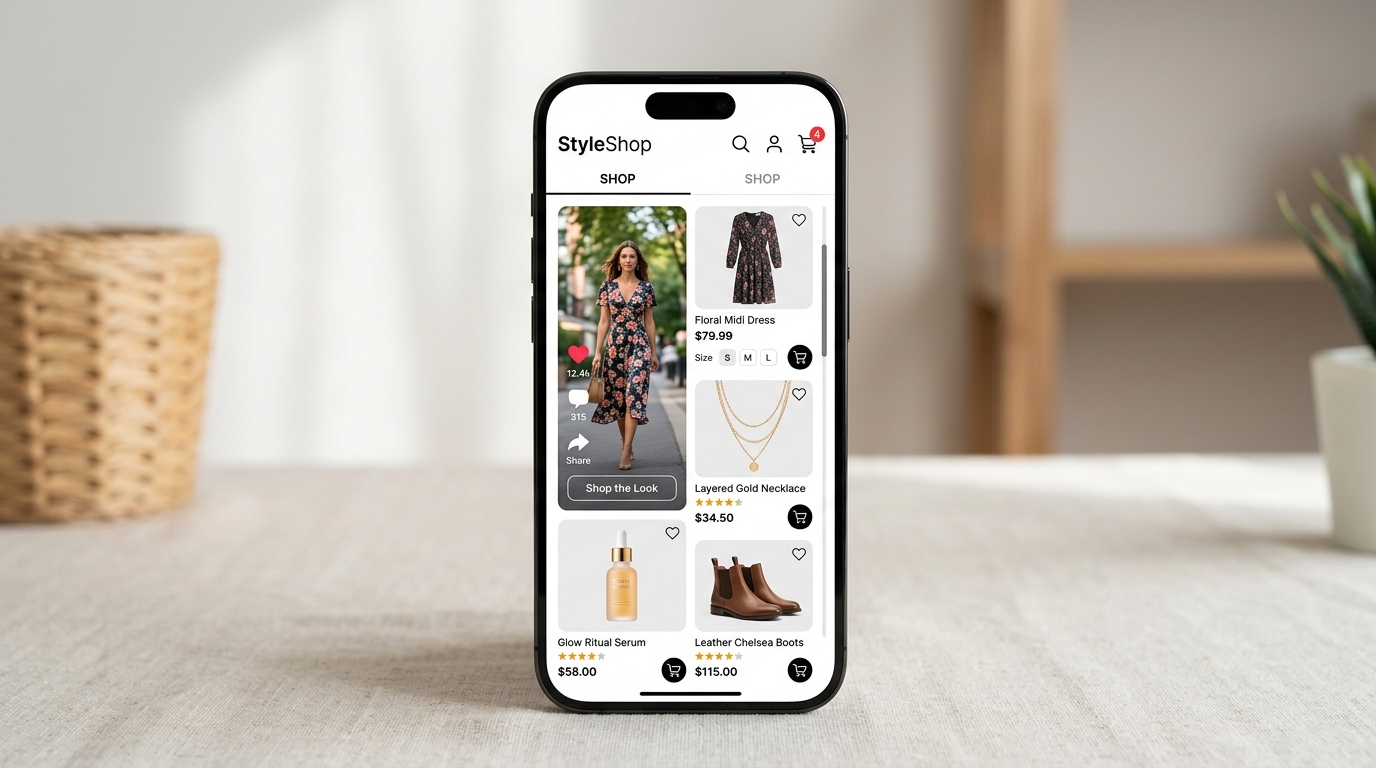
Social commerce in 2026 accounts for 15.2% of all ecommerce sales — and that share is growing faster than any other acquisition channel. The brands winning on TikTok Shop, Instagram Shopping, and Pinterest aren't just posting products; they're building channel-specific strategies that match how buyers actually discover and buy on each platform.
Key Takeaways
- Social commerce drives 15.2% of global ecommerce sales in 2026, with mobile commerce projected at $2.4 trillion
- TikTok Shop is the highest-velocity channel — creator-led, live-shopping-driven, and best for impulse and trend purchases
- Instagram Shopping excels at brand-building with purchase intent — ideal for mid-funnel discovery and aspirational categories
- Pinterest is the most underrated social commerce channel, with high buyer intent and longer purchase windows
- Allocate budget by category fit, not by platform popularity — ROI depends on what you sell and who buys it
The State of Social Commerce in 2026: Why It's Now Mainstream
Social commerce is no longer a test-and-learn experiment. At 15.2% of global ecommerce sales, it has crossed the threshold from emerging channel to table stakes for any DTC brand that wants to compete (Shopify, 2026).
Three forces converged to make this happen. First, mobile commerce hit $2.4 trillion in projected 2026 volume (eMarketer, 2025) — and social platforms are built for mobile by design. Second, the creator economy matured. Consumers trust recommendations from creators they follow more than traditional ads, and platforms have built checkout directly into that trust relationship. Third, checkout friction dropped to near zero. TikTok Shop, Instagram's native checkout, and Pinterest's shoppable pins all let customers buy without leaving the app.
The result: social commerce is no longer just a brand-awareness play. It drives attributable, measurable revenue — and the brands treating it as a dedicated channel are pulling ahead of those still boosting posts and hoping.
| Platform | Primary Strength | Best Category Fit | Purchase Speed |
|---|---|---|---|
| TikTok Shop | Discovery + Impulse | Beauty, apparel, trending goods | Fast (impulse) |
| Instagram Shopping | Brand equity + intent | Fashion, home, lifestyle | Medium |
| Pinterest Shopping | High-intent discovery | Home, fashion, food, DIY | Slower (planned) |
TikTok Shop: The High-Velocity, Creator-Led Sales Channel
TikTok Shop is projected to reach $87 billion in global GMV in 2026 — more than doubling year-over-year. That growth is not accidental. TikTok rebuilt its commerce infrastructure around two things that traditional ecommerce channels can't replicate: viral discovery and live shopping.
Why TikTok Shop Works Differently from Every Other Channel
On Meta or Google, you pay for access to audiences who are passively scrolling or actively searching. On TikTok Shop, creators bring audiences to your product inside content those audiences actually want to watch. The purchase isn't interrupting the content — it is the content.
For ecommerce brands, this means the asset that drives revenue isn't your ad budget. It's your creator relationships and your ability to produce (or source) authentic product content that performs natively on the platform. Brands testing 20–30 new creative variants monthly outperform those with static creative (Meta/CommonThread, 2026) — and the same principle holds with double the intensity on TikTok.
The GMV Max Requirement for BFCM 2026
For brands planning to participate in TikTok Shop's official BFCM promotions, GMV Max campaigns are now mandatory. This is TikTok's AI-driven campaign type that automatically allocates budget to the highest-converting placements. The brands that will win BFCM on TikTok are the ones that get GMV Max set up now and feed the algorithm quality creator content before the season peaks. For the full BFCM playbook, read our guide on BFCM ad creative strategy across all platforms.
Recommended TikTok Shop strategy for ecommerce social commerce:
- Prioritize creator seeding over paid ads as your primary growth lever
- Run GMV Max campaigns as the campaign structure, not manual targeting
- Invest in live shopping shows — sessions generate 2–3× the conversion rate of standard in-feed product posts
- Focus on categories with high impulse potential: beauty, wellness, accessories, trending fashion, novelty goods
Instagram Shopping: Brand-Building With Purchase Intent
Instagram Shopping sits in the middle of the funnel in a way TikTok Shop doesn't. Buyers on Instagram are often in discovery mode — they follow brands they like, save products they want, and eventually purchase when the moment is right. That purchase window is longer than TikTok, but the buyer quality is often higher.
What Makes Instagram Shopping Different
Instagram's algorithm rewards consistent, aesthetically coherent brand presence. The brands that perform best on Instagram Shopping aren't running viral moments — they're building accumulated brand equity through reels, carousels, and stories that keep their products visible to warm audiences over time.
Instagram Checkout removes the drop-off between discovery and purchase. For high-average-order-value categories — premium apparel, jewelry, home goods, skincare — this matters enormously. A buyer who would abandon a mobile browser checkout will often complete the same purchase natively.
Shoppable Content Formats That Work on Instagram in 2026
- Product-tagged Reels: Short-form video with product tags drives the highest discovery reach; aim for 15–30 second formats that show the product in use
- Carousel posts with price anchoring: Multiple product angles with prices visible; works especially well for fashion and home décor
- Stories with product stickers: Used for time-limited promotions and new arrivals — high engagement from existing followers
- Collaborative posts (Collab feature): Brands co-posting with creator accounts get double the reach with shared attribution
Fashion, luxury goods, home décor, beauty, and lifestyle brands consistently outperform the platform average. If your product is aspirational and photogenic, Instagram Shopping is your highest-quality social commerce channel. Our creative team at Atlas builds Instagram-optimized content packages specifically structured for brand equity and social commerce conversion.
Pinterest Shopping: The Underrated Discovery Channel for Ecommerce
Pinterest is the most underinvested social commerce channel for most ecommerce brands — and that gap is an opportunity. Pinterest's user base comes to the platform with explicit purchase intent. They're building boards, planning purchases, and saving products they intend to buy. That's a fundamentally different mindset from passive scrolling on TikTok or Instagram.
Why Pinterest Buyers Convert Differently
Pinterest purchase windows are longer — often weeks or months — but the purchase completion rate once a buyer engages is meaningfully higher than other platforms. A buyer who saves your product to a "home renovation" or "holiday gifts" board is signaling strong intent.
For Q4 in particular, Pinterest's gift-discovery behavior peaks starting in October. Buyers building gift lists for the holidays start their research on Pinterest before they ever land on TikTok or Instagram. Brands with well-optimized Pinterest Shopping catalogs capture that intent early in the consideration journey.
Pinterest Shopping Setup Essentials for 2026
- Verified merchant status: Required for shoppable pins and enhanced placement; apply through the Pinterest Business hub
- Product catalog sync: Connect your Shopify catalog to Pinterest via the Pinterest app or feed — enables dynamic product pins that update price and availability automatically
- Rich Pins: Enable for products, recipes, and articles; rich pins pull live metadata from your site and outperform standard pins in engagement
- Pinterest Ads for Shopping: Shopping campaigns using your catalog consistently outperform awareness campaigns for conversion-focused goals; target by interest cluster
Home décor, furniture, fashion, DIY and craft supplies, food and beverage, wedding, and seasonal/gift categories earn the most ROI on Pinterest. If your products fit any of these verticals, you should have an active Pinterest Shopping presence. Most of your competitors don't — and that's the point.
How to Allocate Resources Across Social Commerce Channels
The most common mistake brands make with social commerce is treating all three platforms as interchangeable and spreading budget evenly. Each platform rewards a different content style, buyer mindset, and purchase timeline.
Start with category fit, not platform popularity. Ask: where does your buyer naturally discover products like yours?
| Brand Category | Primary Channel | Secondary Channel | Skip or Minimal |
|---|---|---|---|
| Beauty / Skincare | TikTok Shop | Instagram Shopping | Pinterest (lower fit) |
| Fashion / Apparel | TikTok Shop | Instagram Shopping | Pinterest (supplement) |
| Home Décor / Furniture | Pinterest Shopping | Instagram Shopping | TikTok (lower intent) |
| Food / Beverage | TikTok Shop | Pinterest Shopping | Instagram (lower conversion) |
| Electronics / Tech | TikTok Shop | Instagram Shopping | Pinterest (lower fit) |
| Jewelry / Accessories | Instagram Shopping | Pinterest Shopping | TikTok (supplement) |
| DIY / Craft | Pinterest Shopping | TikTok Shop | Instagram (supplement) |
| Novelty / Gifts | TikTok Shop | Pinterest Shopping | Instagram (supplement) |
Budget Split Starting Point
For most DTC brands, a 60/30/10 split across your top three channels is a reasonable starting point: 60% to your highest-performing channel (based on attributable revenue, not impressions), 30% to your secondary channel, and 10% to testing or maintaining your third.
Adjust quarterly based on actual ROAS by channel, not content volume. Use platform-native analytics plus UTM parameters in your Shopify reports to get a cleaner picture of real attribution.
Unified Content Approach
The most efficient brands create hero content once and adapt it for each platform. A 60-second product demo video can become: a TikTok Shop creator brief template, an Instagram Reel (trimmed), a Pinterest idea pin, and a YouTube Short. The asset cost is the same; the distribution reach multiplies. Our creative and content team at Atlas builds social commerce content packages specifically structured for cross-platform adaptation, reducing production cost while maximizing channel reach.
If you're also running paid social alongside your social commerce channels, read our guide on BFCM ad creative strategy across Meta, TikTok, and Google for the full picture. For the performance marketing side of social commerce, Atlas's performance marketing team manages paid channel execution across all three platforms.
FAQ: Ecommerce Social Commerce Strategy
What is social commerce and how is it different from social media marketing?
Social commerce is when the entire purchase journey — discovery, consideration, and checkout — happens within a social platform without the buyer leaving the app. Traditional social media marketing drives traffic to an external website where the purchase happens. The distinction matters because social commerce removes the friction of the redirect, which is where a significant percentage of buyers drop off. TikTok Shop, Instagram Checkout, and Pinterest's shoppable pins all enable social commerce natively.
Which social commerce platform has the best ROI for ecommerce brands in 2026?
It depends on your product category. TikTok Shop currently delivers the highest velocity for beauty, apparel, and novelty goods — but it requires active creator relationships and frequent content output. Instagram Shopping delivers better results for aspirational and premium categories where brand equity matters. Pinterest has the highest buyer intent of the three but the longest purchase window. The best ROI comes from matching your category to the platform where your buyer's mindset naturally fits, not from chasing the largest platform.
How much does it cost to get started with social commerce?
Getting started on all three platforms is free — you can sync your Shopify product catalog to TikTok Shop, Instagram Shopping, and Pinterest Shopping at no cost. Paid promotion accelerates growth but isn't required to make your first sales. The real investment is content: TikTok Shop specifically rewards brands that produce (or source from creators) authentic, high-frequency product content. Plan for content creation costs — either in-house production time or creator seeding budget — as your primary social commerce operating expense.
How do you measure social commerce performance?
Use a combination of platform-native analytics (TikTok Shop analytics, Instagram Insights with shopping data, Pinterest Analytics) and UTM parameters attached to your product links. In Shopify, create a custom report filtering sessions and revenue by source/medium matching each platform's UTM tags. Note that platform-native attribution will always show higher numbers than Shopify's last-click attribution — the truth is usually somewhere in between. For BFCM planning, set baseline metrics now so you have a clean comparison period.
Is social commerce worth the effort for a small ecommerce brand?
Yes — with a caveat. If you have fewer than 10 SKUs and limited content production capacity, start with one platform (TikTok Shop for most categories) and do it well before expanding. Spreading thin across three platforms produces weak results on all of them. For brands with 10+ SKUs, a content production workflow, and a BFCM season to win, all three platforms deserve attention — but prioritize by category fit and available bandwidth.
Ready to Build Your Social Commerce Strategy?
Social commerce at 15.2% of ecommerce sales is a channel too large to ignore heading into Q4. The brands setting up TikTok Shop GMV Max campaigns, optimizing Instagram Checkout, and activating Pinterest Shopping catalogs now are the ones that will own the BFCM social commerce pie.
Atlas Media Group manages social commerce strategy, content creation, and paid channel execution for ecommerce brands across TikTok Shop, Instagram, and Pinterest. If you want to build a unified social commerce strategy before the holidays, our creative and performance marketing team can help you get there.