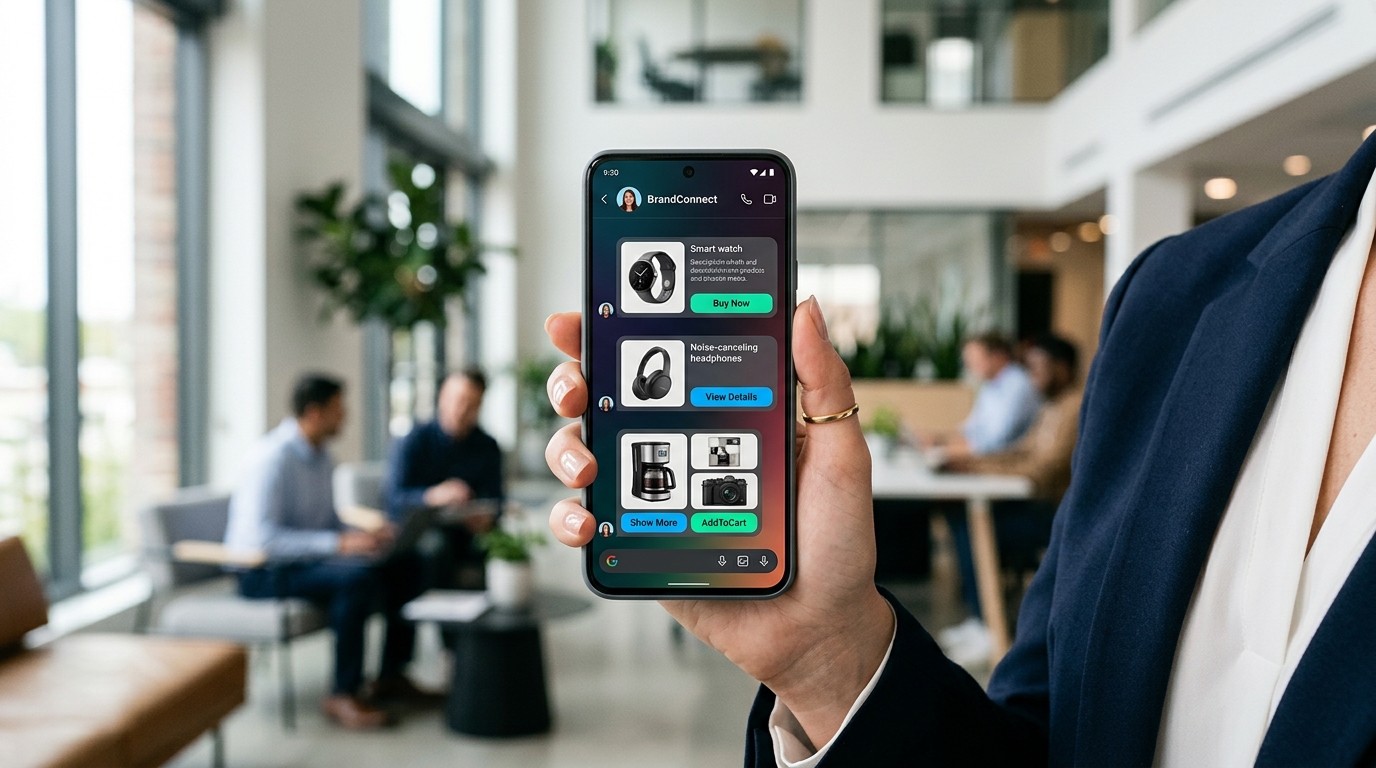
Klaviyo RCS messaging is the platform's biggest channel expansion since it launched SMS — and most ecommerce brands haven't heard of it yet. RCS (Rich Communication Services) replaces plain-text SMS with a branded, interactive messaging experience that supports images, video, read receipts, and tap-to-action buttons, delivered natively to Android and iPhone without requiring a third-party app. Here's what it means for your retention stack and whether you should move on it now.
What Is RCS Messaging and How Does It Differ From SMS?
SMS hasn't fundamentally changed since 1992. It sends plain text, capped at 160 characters, with no confirmation that anyone read it, no images, and no way to add interactivity. It works on every phone on every carrier — and that universality is its only real advantage over what's come since.
RCS is the successor standard, built into Android's native Messages app and supported on iPhones running iOS 18 or later. When a message is sent over RCS, the recipient sees a rich, visually branded experience: high-resolution product images, carousels, tap-to-buy buttons, branded sender names with a verified checkmark, read receipts, and typing indicators. It looks and functions more like an iMessage thread than a promotional text blast.
For ecommerce brands, the practical difference is significant. An abandoned cart SMS says: "You left something behind. Shop now: [link]". An abandoned cart RCS message shows the product image, the price, a "Complete Purchase" button, and a "View More" button — all without the customer needing to click a link and wait for a mobile browser to load.
| Feature | SMS | RCS |
|---|---|---|
| Character limit | 160 characters | Unlimited (up to 8,000 chars) |
| Images/video | MMS only (compressed, extra cost) | Native high-resolution support |
| Branded sender ID | No (shows phone number or short code) | Yes (verified business name + logo) |
| Interactive buttons | No | Yes (CTA buttons, reply suggestions) |
| Read receipts | No | Yes |
| Typing indicators | No | Yes |
| Device support (2026) | Universal | ~75–85% of US smartphones |
| Fallback if unsupported | N/A | Automatic SMS fallback |
Why Klaviyo Is Betting Big on RCS in 2026
Klaviyo launched 260+ MCP tools and introduced RCS messaging as part of the same wave of omnichannel infrastructure updates in 2026. The strategic logic is clear: Klaviyo's value proposition is being the single platform where brands manage email, SMS, push, and now RCS — a unified customer messaging layer rather than a point solution for any one channel.
RCS fits this vision because it closes the gap between email's visual richness and SMS's immediacy. Email gets opened when someone is ready to engage with their inbox. SMS arrives on a locked screen and demands attention immediately — but until RCS, that immediate attention landed on a plain link. RCS keeps the lock-screen urgency while delivering the visual context that drives purchase decisions.
Klaviyo is also rolling out Smart Translations for SMS in the same update cycle — supporting 68 languages in a single step — which signals the platform is aggressively expanding channel breadth and reach simultaneously. For brands already on Klaviyo for email and SMS, adding RCS is an incremental configuration, not a new tool adoption.
RCS Features That Matter for Ecommerce: Interactive Buttons, Rich Media, Read Receipts
Three RCS features have the most direct impact on ecommerce conversion rates.
Interactive buttons are the biggest unlock. Instead of a link that reads "shop now," an RCS message can include tap-to-action buttons with specific CTAs: "Complete Purchase," "Track My Order," "Get 20% Off," or "View Full Collection." Each button routes to a specific URL or triggers a specific action. The reduction in friction — tapping a button vs. clicking a link and navigating a mobile browser — measurably improves click-through rates.
Rich media carousels let brands show multiple products in a single message. A cross-sell RCS following a purchase can show three recommended products with images, prices, and individual "Add to Cart" buttons — the kind of personalized experience that previously required an email template or an app push notification.
Read receipts change how you analyze campaign performance. With SMS, you know your delivery rate and your click rate, but you have a gap in the middle — did they see it and ignore it, or did it arrive in a dead-number inbox? RCS read receipts close that gap, giving you opened data equivalent to email open tracking. That data improves segmentation over time: you can suppress engaged-but-not-clicking subscribers differently than subscribers who haven't opened recent messages at all.
Which Devices and Carriers Support RCS Today
RCS support expanded significantly in 2025 and 2026. The key developments:
- Android: All major Android devices running Android 5.0+ with Google Messages as the default SMS app support RCS. This covers effectively all modern Android devices in the US across AT&T, Verizon, T-Mobile, and most MVNOs.
- iPhone: Apple added RCS support in iOS 18, released in fall 2024 and now the dominant iOS version in the US. iPhones on iOS 18+ can receive RCS messages in the native Messages app — the same app where iMessages appear.
- Carrier support: All four major US carriers support RCS. MVNO support varies; most major MVNOs have enabled it as of 2026.
The combined result is an estimated 75–85% of US smartphone users can receive RCS messages without any action on their part. The remainder fall back to SMS automatically when Klaviyo sends via RCS — no message is lost, and no list segmentation is required from your end. Klaviyo handles the routing.
Setting Up Your First RCS Campaign in Klaviyo
If RCS is available in your Klaviyo account, setup follows a similar path to SMS channel configuration.
Step 1: Enable RCS in your Klaviyo account settings. Navigate to Settings > Channels > SMS & RCS. If RCS is enabled for your account, you'll see a toggle and a walkthrough for business verification — the branded sender ID requires verifying your business name and logo with the RCS Business Messaging registry.
Step 2: Complete business verification. This is the step most brands underestimate. RCS branded sender IDs require verification through Google's RCS Business Messaging platform, which Klaviyo facilitates. Plan for 5–10 business days. Without verification, messages send from a generic sender ID, which defeats a core benefit of RCS.
Step 3: Build your first RCS flow. Start with your highest-ROI existing SMS flow — typically abandoned cart. In the Klaviyo flow builder, duplicate the SMS step and select RCS as the channel. Add your product image, write your message body (you now have character room to breathe), and configure your CTA buttons. The visual preview in the Klaviyo editor shows exactly what the subscriber will see on an RCS-capable device.
Step 4: Set up SMS fallback. Klaviyo handles fallback automatically, but verify your fallback SMS copy still makes sense as a plain-text message. If your RCS message relies heavily on the visual content (e.g., "See the three options above"), the fallback SMS needs to include that context in text form.
Step 5: A/B test RCS vs SMS. Don't assume RCS will outperform SMS immediately. Test with a portion of your list — 20–30% — and compare click-through rates, conversion rates, and revenue per message. RCS will typically win on CTR; whether the higher per-message cost produces better net ROI depends on your product price point and conversion rate.
How RCS Fits Into Your Existing Klaviyo Retention Stack
RCS doesn't replace anything in a well-built Klaviyo setup — it enhances the SMS layer you already have. Think of it as an upgrade to the delivery format for existing flows, not a new channel that requires new strategy.
The flows where RCS adds the most value are the ones where visual context drives the conversion decision. Abandoned cart, post-purchase cross-sell, back-in-stock notifications, and product launch announcements all benefit from product imagery and interactive buttons. Transactional messages — shipping confirmations, order updates — benefit from read receipts and branded sender ID, but don't need the full visual treatment.
Where RCS adds less incremental value is in list-wide promotional sends, where the message is fundamentally about the offer (e.g., "40% off today only"). The discount drives the conversion, not the visual experience. SMS still works fine there, and the lower per-message cost makes it the right call for high-volume broadcast sends.
For brands already running a solid SMS retention program — with behavior-triggered SMS automation flows built and optimized — RCS is the natural next upgrade. It requires minimal additional strategy work and produces measurable lifts in the flows where visual context matters most.
Email and SMS retention programs are also the area where our team at Atlas sees the biggest gap between what brands are running and what's possible. If your Klaviyo setup is collecting dust or running on default flows, explore our performance marketing and retention services to see how we build these systems for ecommerce brands from scratch.
FAQ: Klaviyo RCS Messaging for Ecommerce Brands
What is RCS messaging and how does it differ from SMS?
RCS (Rich Communication Services) is the next-generation standard for mobile messaging, built directly into Android's native Messages app and now supported on Apple devices running iOS 18 and later. Unlike SMS, which is limited to plain text and 160-character segments, RCS supports high-resolution images, video, branded sender IDs, read receipts, typing indicators, and interactive buttons — all without requiring a third-party app download. For ecommerce brands, this means promotional messages that look like a branded mini-app experience rather than a plain text blast.
Is Klaviyo RCS available to all accounts now?
Klaviyo began rolling out RCS messaging in 2026 as part of its omnichannel expansion, but availability may be phased by account tier and region. Klaviyo Plus accounts and those on higher-tier plans typically get early access to new channel features. Check your Klaviyo dashboard under Settings > Channels or contact your Klaviyo account manager to confirm availability and get on the early access list if RCS isn't live in your account yet.
What devices and carriers support RCS in 2026?
RCS support has expanded dramatically in 2026. Android devices running Android 5.0 and later with Google Messages as the default SMS app support RCS on all major US carriers including AT&T, Verizon, T-Mobile, and most MVNOs. Apple added RCS support in iOS 18, meaning iPhone users on iOS 18+ can also send and receive RCS messages — a development that dramatically expanded the addressable audience. The practical coverage is now estimated at 75–85% of US smartphone users, though the exact percentage varies by carrier and device configuration.
Does RCS cost more than SMS in Klaviyo?
RCS messages typically carry a higher per-message cost than standard SMS, reflecting the richer delivery format and carrier infrastructure. Pricing in Klaviyo is message-credit based and RCS messages consume more credits per send than SMS. However, the higher engagement rates — driven by interactive buttons, branded identity, and rich media — typically produce a lower cost per conversion despite the higher per-message cost. Brands seeing 15–25% higher click-through rates on RCS vs SMS often find the unit economics favorable once flows are optimized.
Should brands replace SMS with RCS or run them together?
Run them together, not as a replacement. RCS falls back to SMS automatically when a subscriber's device or carrier doesn't support RCS — so your existing flows continue to work without any gaps. The right approach is to build your flows in Klaviyo using RCS-enhanced content (images, buttons, branded sender) and let Klaviyo handle the fallback routing. This way, subscribers with RCS-capable devices get the richer experience while non-RCS subscribers still receive the core message via SMS. No list management changes required.
If you're running Klaviyo for email and SMS and want to add RCS to your retention stack — or if your current SMS program needs a rebuild before adding new channels — our team builds end-to-end retention programs for ecommerce brands. Talk to us about your Klaviyo setup.