TL;DR — Key Takeaways
- A vague UGC brief produces unusable content — the brief, not the creator, is the variable you control
- Always specify hook type, messaging hierarchy, do/don't list, and B-roll requirements as separate deliverables
- Request raw, unedited footage with no baked-in music — this is what lets your media team test multiple ad variants
- Usage rights should specify duration (12–24 months), platforms, editing rights, and exclusivity terms explicitly
- Creator-led content drives 85% of TikTok Shop discovery — the brief is what connects creator authenticity to paid performance
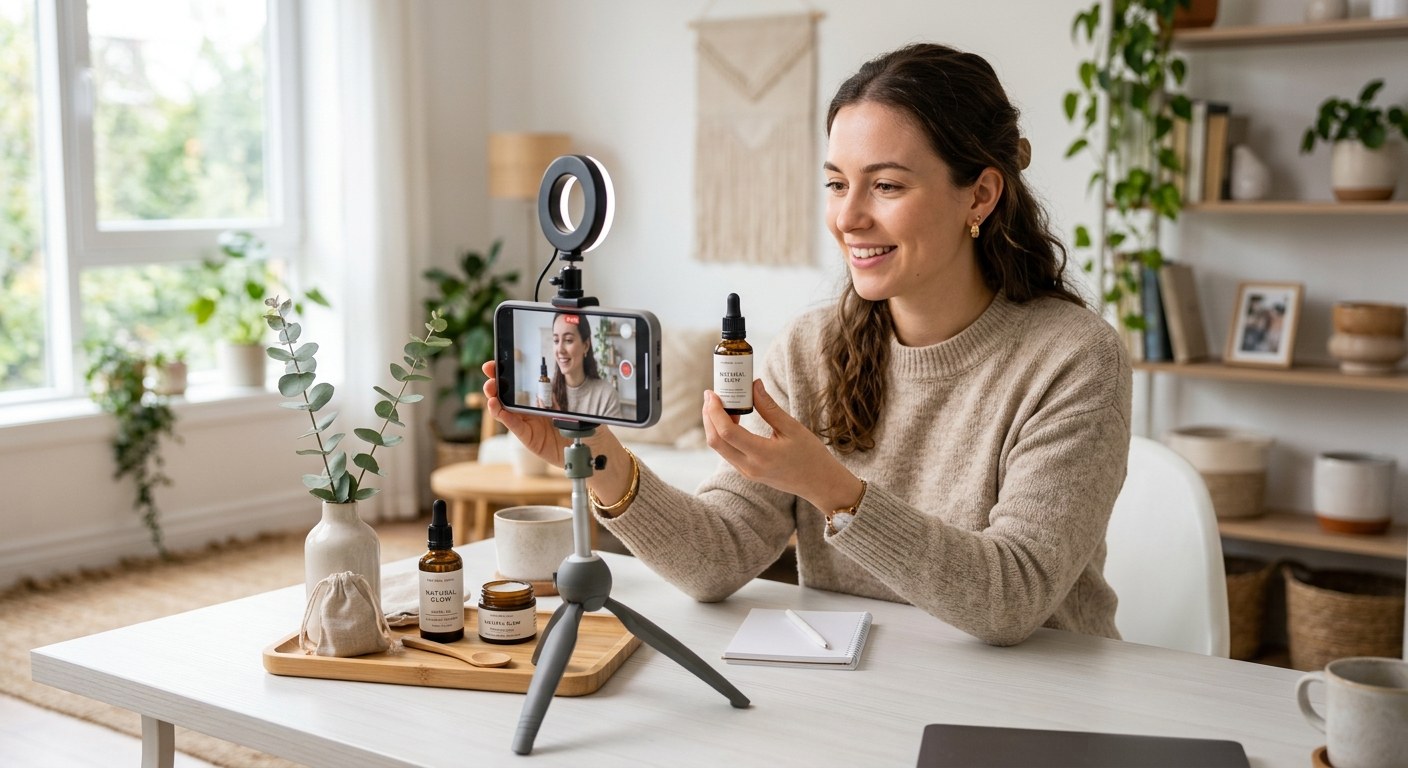
A strong ugc creator brief is the difference between raw footage you can actually run as an ad and 60 seconds of someone awkwardly describing your product into their phone. The brief controls everything: hook structure, messaging angle, raw footage requirements, and usage rights. Get it right and you get content that performs. Skip it — or send a vague one-pager — and you'll spend more time reshooting than you saved by using creators in the first place.
Most brands using UGC have the same problem: spending $50K+ per month on Meta and TikTok but handing creators a three-sentence brief with a product link and the phrase "be authentic." The content comes back unusable — wrong aspect ratio, no hook, no clear benefit statement, no B-roll. The brief is the problem, not the creators.
This post includes the exact UGC creator brief template our team at Atlas uses for ecommerce clients. Copy it, adapt the variables, and start getting content that actually converts.
Why Your UGC Brief Is the Problem (Not Your Creators)
Creators are not strategists. They're storytellers. When you hand them a vague brief, they fill in the gaps with what feels natural to them — which may or may not align with what your paid media buyer needs at the ad set level.
The gap between "authentic creator content" and "content that converts in paid ads" is real, and it's bridged entirely by the brief. A well-constructed brief doesn't constrain creativity — it channels it toward the specific outcome you need. Pair your creative brief with a strong ecommerce product photography direction strategy to ensure the assets you receive actually convert on your product pages.
The most common brief failures:
- No hook direction. Creators open with their name, their location, or "I just got this product." None of those stop a scroll. The brief should specify the exact hook format.
- No B-roll list. Without explicit B-roll guidance, creators shoot talking-head content only. You can't cut around it, you can't test hooks, you can't repurpose it.
- No messaging hierarchy. Creators guess at what the brand values. Sometimes they nail it. Usually they don't.
- No raw footage requirement. You receive edited video with music baked in. You can't use it in ads — the music creates licensing issues, and you can't swap hooks or add supers.
- No usage rights clarity. Six months later, your best performer is flagged because usage rights expired or were never formalized.
Fix all five with one comprehensive brief document.
The Full UGC Creator Brief Template (Copy and Use)
Below is the full template. Bold items are required; adapt bracketed variables to your brand and campaign.
This template is deliberately longer than most brands are comfortable with. That's intentional. The specificity is what separates usable content from reshoots.
Hook Options — The 5 Proven Structures That Work in Paid Ads
The four hook options in the template cover the main archetypes. A fifth — the testimonial/story format — rounds out the toolkit for retargeting contexts. Here's when to prioritize each:
| Hook Type | Best For | Platform | Notes |
|---|---|---|---|
| Problem/Agitation/Solution | Awareness campaigns | TikTok, Reels | Stops scroll fastest when problem is specific |
| Transformation | Retargeting, mid-funnel | Meta feed | Works best with visual before/after products |
| "What I Wish I'd Known" | Information-seeking audiences | TikTok search | High relevance for beauty, health, supplements |
| Bold Claim | Cold audiences, top of funnel | All platforms | Must be specific — generic claims don't stop scrolls |
| Testimonial/Story | Warm audiences, review-heavy categories | Meta, email | Trust-building; use selectively for retargeting |
One critical briefing rule: ask creators to film multiple hook openings (15–20 seconds each) as separate clips. Your paid media team can then test hooks as variables without reshooting. A single 60-second video with one hook is one test. Multiple raw openings give you five tests from one creator relationship.
According to Shopify's social commerce research, UGC is trusted more by consumers than branded content and is a highly influential conversion driver — but only when the content is structured to address purchase objections, not just showcase the product. Hook structure is what creates that alignment.
Raw Footage Requirements — What to Ask For So You Can Edit Later
This is the section most brands skip, and it's the one that creates the most downstream friction.
When creators deliver edited video, you lose control of the creative. The edit is their creative vision — which may be great for organic, but it's usually wrong for paid. Problems:
- Music is baked in — licensing issues for ads
- The hook is buried in the middle of the video
- No isolated product close-ups exist
- Color grading can't be adjusted for platform delivery specs
Specify raw footage delivery explicitly in the brief. What to request:
Primary recording: One continuous take (or multiple natural takes, unedited) of their on-camera delivery. This becomes your A-roll. You'll cut it, tighten it, and add whatever they can't control.
B-roll clips: Individual clips, each 5–15 seconds, no narration. Product in context, close-ups, lifestyle moments. These are what make your ad feel like a real production instead of a talking head.
Clean audio: If your creator has a decent setup, ask for one version with ambient sound only — no music. Music adds rights complexity and prevents you from adding platform-licensed audio in post.
File format: MP4, 4K or 1080p minimum, filmed in native device aspect ratio. You can always crop down; you can't crop up.
For ecommerce brands building UGC programs at scale, the raw footage library becomes a creative asset that outlasts any single campaign. The strongest UGC programs are also anchored in clear brand positioning — creators perform best when they know exactly who the brand is for and what it stands for. Hooks test, B-roll gets repurposed, and the cost-per-usable-ad drops significantly when creators understand what you actually need.
Usage Rights Language — Protecting Your Brand Without Killing Creator Relationships
Usage rights are where brand and creator interests diverge most visibly. Brands want perpetual rights everywhere forever. Creators want fair compensation for ongoing use and control over where their likeness appears. The middle ground that works:
Duration: 12 or 24 months covers most campaign cycles. Perpetual licenses are a red flag for experienced creators and rarely necessary — after 12–24 months, fresh creative outperforms recycled content anyway.
Platforms: Be specific. "Digital advertising" is vague. List the platforms: Meta (Facebook/Instagram), TikTok, YouTube, Google Display, email, and your owned website. Out-of-home and broadcast TV require separate agreements and higher fees.
Exclusivity: If you need it, pay for it and time-limit it. "No competing brands for 90 days" is reasonable. "No competing brands forever" is not — and you'll lose good creators.
Editing rights: State explicitly that you can edit, crop, add supers, create derivative cuts, and swap components. Without this language, some creators will object when they see how their content has been modified. Get it in writing upfront.
Organic posting rights: Creators should always retain the right to post their organic content on their own channels. If you need an embargo before paid launch, specify it — typically 48–72 hours.
According to Dark Room Agency's 2026 creator commerce research, creator-led content accounts for 85% of TikTok Shop discovery and consistently outperforms brand-produced content in engagement metrics. That performance is contingent on creators having the latitude to be authentic — which proper usage rights structure supports, not undermines.
For brands running creative strategy and ad production at scale, usage rights structure is part of the program setup — not an afterthought. If you're building a UGC program in-house, get a template reviewed by a media licensing attorney once. The one-time cost is negligible versus the risk of a rights dispute over a top-performing ad.
How to Scale Your Brief Across a Creator Roster
A brief template is a starting point. When you're running 10+ creators per month, you need a brief management system — not a new document from scratch every shoot.
Brand constants (never change between briefs):
- Don'ts list
- Raw footage requirements and file format specs
- Usage rights language
- Delivery method
Campaign variables (change per shoot):
- Product being featured
- Hook options (rotate based on what you're testing)
- Messaging hierarchy (aligned to campaign objective)
- Product-specific B-roll list
Store brand constants in a shared document. Build individual briefs by merging the constants with campaign variables. This takes 10 minutes per brief instead of 60 — and produces more consistent output because the structural expectations never change.
As creator relationships mature, top performers internalize your brand voice and start self-briefing for the structural components. The brief becomes onboarding infrastructure for new relationships, not permanent scaffolding for established ones.
For paid media teams running UGC programs alongside Meta and TikTok campaigns, the brief-to-ad workflow closes the loop between creative strategy and campaign execution. When your media buyer can specify the hook type they need for a given audience segment and your creator brief can fulfill that request systematically, you have a content operation — not just a creator relationship.
FAQ
How long should a UGC creator brief be?
Long enough to eliminate ambiguity, short enough that creators actually read it. In practice, a complete brief runs 1–2 pages covering hook options, the do/don't list, B-roll requirements, and usage rights. Anything shorter is too vague; anything longer gets skimmed. The template in this post represents the minimum viable specificity for content that produces usable paid ad material on the first delivery.
Should I send the same brief to every creator?
The structural template stays constant — hook options, B-roll requirements, and rights language don't change. Swap the product details, messaging hierarchy, and specific campaign angle for each shoot. If you're briefing 10 creators for the same campaign, they should all receive the same messaging hierarchy so you can test creative variables (hook type, delivery style) rather than messaging differences. Inconsistent messaging across a creator batch creates noise in your performance data.
Do I need a lawyer to write UGC usage rights?
For an early-stage program, the language in this template covers the most common scenarios and works as a functional starting point. Once your monthly UGC spend exceeds $10K or you're placing content in high-stakes contexts — major media buys, brand partnerships, retail — get a media licensing attorney to review your standard agreement. The one-time cost is negligible compared to the risk of a rights dispute over a top-performing ad.
What's the difference between a UGC brief for organic vs. paid?
A brief for organic creator content optimizes for brand alignment and authentic audience engagement on their channel. A brief for paid ads optimizes for testable creative components — hooks, B-roll, isolated product shots, clean audio — because your media team will edit the content into multiple ad variants. The two briefs look different and serve different objectives. The template in this post is designed specifically for paid ad use, not organic posting.
How do I handle creators who don't follow the brief?
If the first delivery is off-brief, send specific feedback with timestamps and re-request what's missing before writing them off. If a creator consistently ignores briefs, that's a signal they're better suited for organic partnerships than paid ad production — not all creators operate the same way. Build a shortlist of "paid-ready" creators who have demonstrated they can follow technical direction. That roster becomes your highest-value production asset over time.
Ready to Build a UGC Program That Scales?
Running UGC creator programs in-house has a ceiling — brief quality, production volume, and creative testing capacity all compound over time. Our creative strategy and ad production practice builds and manages full-scale creator programs for ecommerce brands, from brief architecture to campaign integration.
Talk to Our Creative Team