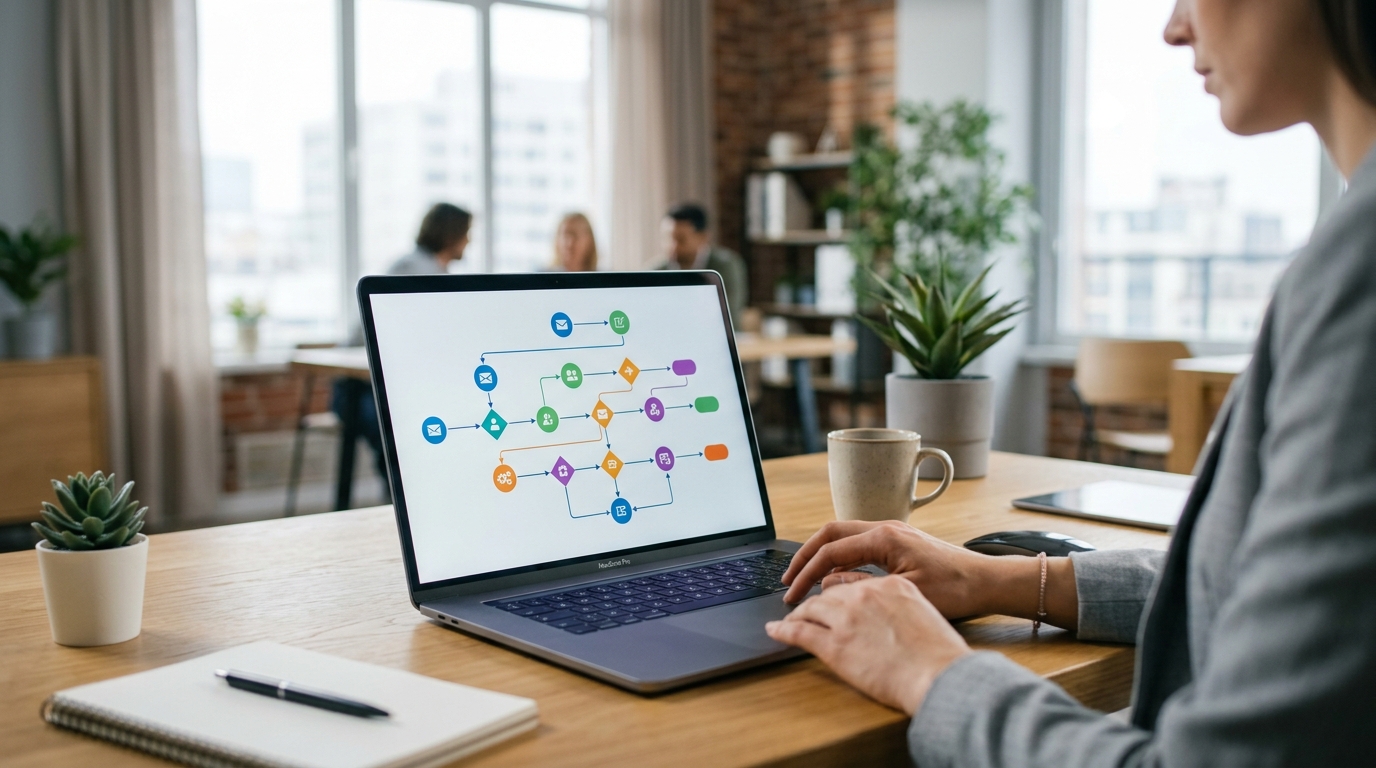
Klaviyo flows 2.0 dtc ecommerce 2026 marks the most significant infrastructure upgrade Klaviyo has shipped since it launched automated flows. The rebuilt processing engine now handles over 74,000 profiles per second — a step-change that matters most during BFCM, when abandoned cart and browse abandonment flows can spike 5× overnight. If your flows were built before mid-2026, they need a review before November.
- Klaviyo's Flows 2.0 engine processes 74,000+ profiles/second, eliminating processing delays that plagued high-volume brands during BFCM.
- Abandoned cart flows now trigger within seconds, not minutes — meaningful when a competitor email arrives first.
- New triggers include AI-powered send-time optimization, predictive churn risk, and real-time Shopify event webhooks.
- Email automation drives 320% more revenue than non-automated emails — Flows 2.0 makes that number accessible at scale.
- Any flow built before June 2026 should be audited for compatibility with the new trigger architecture.
What Changed in Klaviyo Flows 2.0 (Technical Overview for Marketers)
The original Klaviyo Flows engine was built for a world where brands sent tens of thousands of emails per day. As DTC brands scaled into millions of subscribers — and BFCM traffic spikes became 5–10× normal volume — the old architecture showed its limits. Processing delays crept into triggered flows at exactly the wrong moment.
Flows 2.0 is a ground-up rebuild. The processing engine now supports over 74,000 profiles per second, meaning a massive abandoned cart event — say, 50,000 browsers leaving your site in the first hour of a BFCM flash sale — gets processed in real time, not queued behind a backlog.
For most brands, the day-to-day difference won't be visible. But during BFCM weekend, when your abandoned cart flow is the difference between recovering a $180 order or losing it to a competitor, trigger latency matters. Klaviyo has effectively removed processing speed as a variable — now the only thing that determines your flow performance is how well you've built them.
Three core infrastructure changes marketers should know:
- Event webhooks run in real time — Shopify events (placed order, added to cart, started checkout) now hit Klaviyo within 1–3 seconds instead of up to 90 seconds.
- Conditional splits evaluate instantly — multi-branch flows with complex logic (customer LTV > $500, first purchase, AOV above threshold) no longer add processing delay at each split node.
- Flow filters re-evaluate dynamically — profiles that meet exclusion criteria mid-flow are now caught and suppressed in real time, not on a scheduled batch check.
The Core Flows Every DTC Brand Must Have Live Before BFCM
Klaviyo's own data shows that abandoned cart flows recover 5–15% of abandoned carts on average. At BFCM traffic volumes, that's a significant revenue number from infrastructure you set up once. Here are the flows that must be live — and performing well — before the holiday rush.
Abandoned Cart Flow
Your highest-revenue automated flow. The BFCM version should be distinct from your evergreen flow — different subject lines, BFCM-specific urgency language, and tighter timing windows. Send 1 hour after abandonment, not 4.
Minimum structure:
- Email 1: 1 hour after abandonment — "You left something behind" + product imagery
- Email 2: 12 hours later — social proof (reviews, UGC) for the specific product
- Email 3: 24 hours later — scarcity signal ("stock is limited this BFCM weekend") + optional discount for non-purchasers only
Browse Abandonment Flow
Underused by most brands, but particularly powerful during BFCM when browsers are in high-comparison mode. Trigger after someone views a product page without adding to cart. Two-email sequence: first email within 2 hours featuring the viewed product, second email 24 hours later with related product recommendations.
Welcome Series
New subscribers acquired during BFCM often have high purchase intent — they signed up specifically to get your deal. Your welcome series should branch: one path for subscribers who purchase during the welcome window, one for those who don't. The non-purchaser branch should feed into your abandoned cart or browse abandonment flow if they engage with the site.
Post-Purchase Flow
BFCM is your biggest acquisition event. Your post-purchase flow sets the tone for whether those one-time buyers become retained customers. The flow should include: order confirmation, shipping update, delivery confirmation + product education, 14-day check-in + review request, and a 30-day cross-sell based on what they purchased.
| Flow | Avg Recovery / Conversion Rate | Recommended Trigger Window |
|---|---|---|
| Abandoned Cart | 5–15% | 1 hour after abandonment |
| Browse Abandonment | 1–3% | 2 hours after page view |
| Welcome Series | 10–25% open-to-purchase | Immediate, then Day 2, Day 5 |
| Post-Purchase | 5–12% repeat rate in 30 days | Immediate → Day 3 → Day 14 → Day 30 |
| Winback | 8–15% reactivation | 60 days after last purchase |
How to Update Existing Flows for Flows 2.0 Compatibility
If your flows were built before June 2026, there are three specific things to audit before BFCM.
1. Check Your Trigger Event Sources
Flows 2.0 introduces native Shopify checkout events as first-class triggers (not just Klaviyo-tracked events). If your abandoned cart flow was built on a legacy "Checkout Started" event with a 15-minute delay built in "to allow for Shopify sync," remove that delay. Events are now real-time — adding an artificial delay just slows you down.
2. Audit Conditional Split Logic
Any flow using LTV, order count, or predictive analytics splits should be reviewed. Flows 2.0 evaluates these dynamically as the profile moves through the flow — you no longer need to build "holding step" delays before LTV-based splits. Remove them, and your flows will run faster.
3. Check Suppression Filters
The old architecture evaluated flow suppression filters on a scheduled interval. Flows 2.0 does this in real time. If you had workarounds — like duplicate flows for "purchasers" and "non-purchasers" — you can now consolidate into a single flow with a purchase conditional split. Fewer flows means simpler architecture and easier debugging.
One important note: do not rebuild flows from scratch during peak season. Make targeted edits using the clone-and-test approach. Clone the existing flow, make your changes in the clone, A/B test with a 10% traffic split, then swap if the clone wins.
For SMS-based flows — including the new RCS product carousel triggers — see our guide on Klaviyo SMS product feeds and RCS carousels for ecommerce, which covers the configuration side-by-side with email flows.
Advanced Flow Triggers Now Available in 2026
Flows 2.0 ships with several new trigger capabilities that weren't possible in the original engine. These are worth knowing about even if you don't implement all of them before BFCM.
AI-Powered Send Time Optimization
Klaviyo's predictive analytics now calculates the optimal send time per individual profile — not per segment. When enabled on a flow email, Klaviyo holds the send for up to a 24-hour window to deliver within each subscriber's peak engagement window. For flows that aren't time-sensitive (winback, post-purchase education), this can meaningfully improve open rates. Do not enable this on abandoned cart flows — speed matters more than personalization there.
Predictive Churn Risk Trigger
A new trigger that fires when Klaviyo's predictive model identifies a profile as at risk of churning — based on declining engagement, days since last purchase vs. their historical cadence, and session frequency. This powers a "proactive winback" flow distinct from the standard 60-day winback. Particularly useful for high-LTV customers you can't afford to lose during the BFCM-to-holiday window.
Real-Time Segment Membership Trigger
Flows can now trigger when a profile enters or exits a segment in real time, not on Klaviyo's previous 1-hour segment sync cycle. This enables flows like: "When a customer hits 3 purchases, immediately enroll them in VIP onboarding" — without the previous hour-long lag.
Shopify B2B Wholesale Events
For brands using Shopify B2B, Klaviyo now natively reads wholesale order events — so you can build separate flows for wholesale buyers without custom API workarounds. Not relevant for all DTC brands, but worth noting for those running mixed B2C/B2B models.
| New Trigger | Best For | Plan Required |
|---|---|---|
| AI Send Time Optimization | Winback, post-purchase education | Growth+ |
| Predictive Churn Risk | High-LTV proactive retention | Growth+ |
| Real-Time Segment Trigger | VIP onboarding, milestone rewards | Growth+ |
| Shopify B2B Events | Wholesale buyer flows | All plans |
Measuring Flow Performance: The Metrics That Matter
Flow performance reporting improved significantly in Flows 2.0, with attribution windows now configurable per-flow rather than globally. Here's what to watch.
Revenue per recipient (RPR) is the single most important metric. Divide total attributed revenue by the number of profiles that received the flow. This normalizes for audience size and lets you compare across flows. Industry benchmark: abandoned cart RPR should be $3–8+ for a healthy flow on a mid-AOV ecommerce brand.
Flow conversion rate (completions / entries) tells you how many people the flow is actually moving to purchase. A welcome series with 40% open rate but 1% conversion rate has a messaging or offer problem — the engagement is there, the persuasion isn't.
Email-level open and click rates help diagnose where in a multi-email flow you're losing people. If email 1 opens at 55% and email 2 drops to 18%, there's a subject line or send-timing issue on email 2 — not a flow architecture problem.
Unsubscribe rate per flow is a BFCM-season red flag. If urgency-heavy BFCM flows drive unsubscribes above 0.3%, you're burning list health for short-term revenue. Scale back frequency or soften the urgency language.
| Metric | What It Measures | Healthy Benchmark |
|---|---|---|
| Revenue per Recipient | Flow ROI normalized for size | $3–8+ (abandoned cart) |
| Flow Conversion Rate | Entries that become purchasers | 3–8% (cart abandonment) |
| Email Open Rate | Subject line + send time quality | 35–55% (flows, not campaigns) |
| Click Rate | Content + CTA relevance | 4–10% |
| Unsubscribe Rate | List health signal | <0.3% per flow send |
Our team at Atlas regularly audits Klaviyo accounts and finds that most brands are running 6–8 flows when they should have 12–15, and the missing flows (predictive churn, post-purchase cross-sell, VIP onboarding) account for 30–40% of recoverable email revenue. If your email and performance marketing has plateaued, flow gaps are usually where we start.
According to Campaign Monitor's research, email automation drives 320% more revenue than non-automated emails — a gap that widens significantly during high-intent periods like BFCM. Flows 2.0 removes the technical ceiling that previously kept brands from capturing the full benefit at scale.
FAQ: Klaviyo Flows 2.0
Do I need to rebuild my existing flows to get Flows 2.0 benefits?
No — Klaviyo automatically migrated existing flows to run on the new processing engine. You don't need to rebuild anything to benefit from faster trigger processing and real-time conditional evaluations. What you should do is audit your flows for legacy workarounds (artificial delays, duplicate flows, manual exclusion lists) that were built around the old engine's limitations — those can now be simplified or removed, which will improve flow performance.
How does Klaviyo Flows 2.0 handle the volume spike during BFCM?
The new engine processes over 74,000 profiles per second, which means even large-scale BFCM events — simultaneous cart abandonments from a flash sale, mass checkout starts at midnight when a sale drops — get processed without queuing delays. In practical terms, your abandoned cart email hits the inbox within minutes of the triggering event, not behind a processing backlog. For brands doing significant BFCM volume, this is the most meaningful improvement in the upgrade.
What's the difference between Klaviyo's AI send-time optimization in flows vs. campaigns?
In campaigns, Klaviyo's Smart Sending calculates optimal send times across your entire list and staggers delivery accordingly. In flows (new in 2026), AI send-time optimization works per individual profile — it evaluates each subscriber's personal engagement pattern and holds the email for up to 24 hours to hit their specific peak engagement window. This works best for non-time-sensitive flows (winback, post-purchase education) and should not be enabled on urgency-driven flows like abandoned cart, where speed matters more than personalization.
How many flows should a DTC brand have running at once?
Most established DTC brands should have 12–18 active flows. The core set includes: welcome series (2–3 variants by acquisition source), abandoned cart, abandoned checkout, browse abandonment, post-purchase (new customer), post-purchase (repeat customer), winback, and sunset/unengaged suppression. The advanced layer adds: VIP onboarding, predictive churn, cross-sell by product category, replenishment (for consumables), and seasonal gift card flows (Q4-specific triggers for high-margin products that convert email subscribers without discounting physical inventory — see our Shopify gift cards for BFCM guide for campaign mechanics). If you're running fewer than 10 flows, there's revenue sitting uncaptured. Our email marketing team audits Klaviyo accounts for DTC brands and can map your current flow architecture against revenue opportunity.
Is Klaviyo Flows 2.0 included in existing Klaviyo plans?
Yes. Klaviyo automatically upgraded all accounts to the Flows 2.0 engine — there's no additional cost and no action required to access the new infrastructure. New triggers (AI send-time optimization, predictive churn, real-time segment membership) are available on Growth and above plans. If you're on a legacy plan that predates Klaviyo's current pricing structure, check your account settings under "Automations" to confirm you have access to the full new trigger library.
Ready to get more revenue from your Klaviyo flows?
Most DTC brands have significant uncaptured email revenue — in flows they haven't built yet or legacy flows that predate Flows 2.0's capabilities. Our performance marketing team manages Klaviyo strategy for growth-stage brands, from flow audits to full rebuilds timed for BFCM. Book a call and we'll map the gaps in your current setup.
Get a Klaviyo Flow Audit